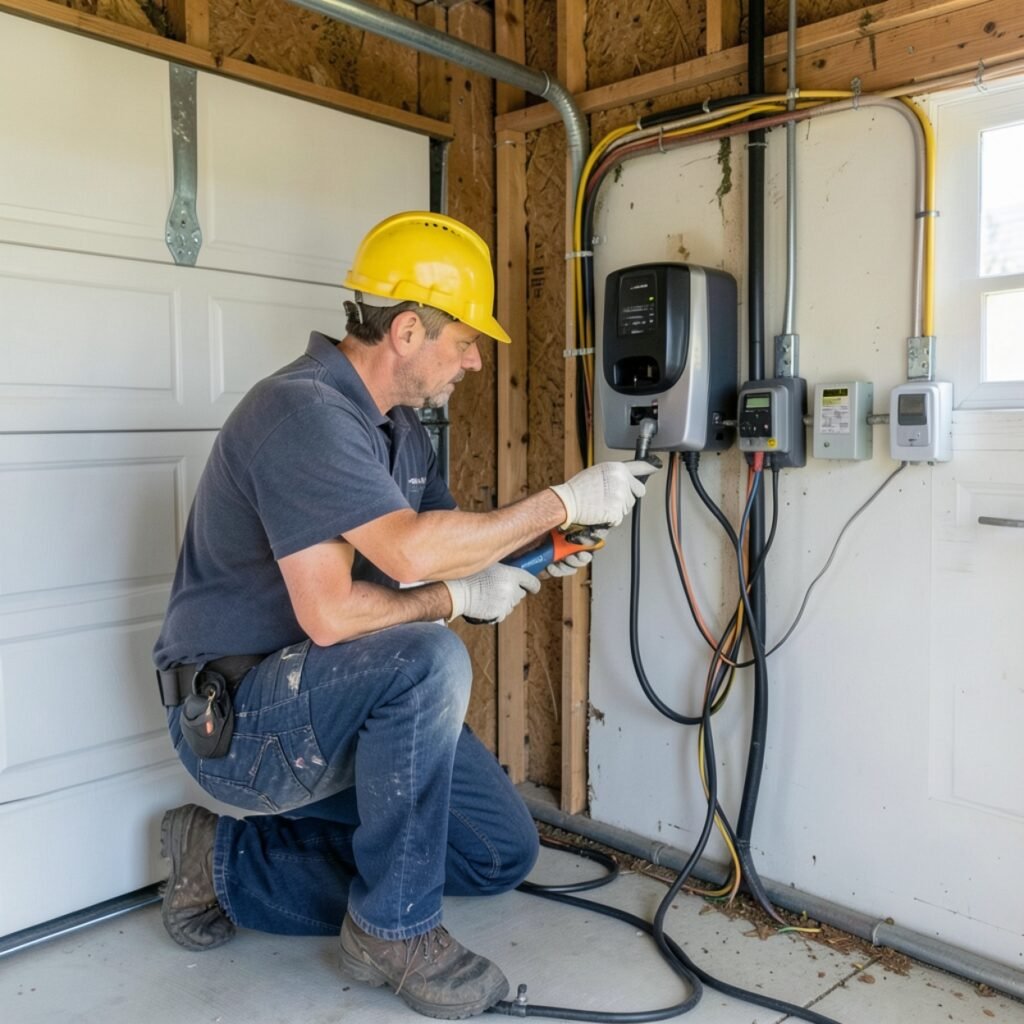

Home charging can make Tesla ownership convenient, but the right setup depends on where the vehicle is parked, the electrical service available, daily mileage, and local installation rules. Plan the charging arrangement before delivery rather than assuming every home can support the same equipment.
Check the parking situation
Homeowners should assess the distance from the electrical panel to the parking space. Renters and condominium residents may need written permission, building approval, or a shared-charging arrangement before installing equipment.
Ask a qualified electrician
Have a licensed electrician assess the panel, circuit capacity, wiring route, permits, and installation requirements. Avoid improvised wiring or extension-cord setups that are not approved for the intended charging load.
Estimate charging needs
Daily mileage, charging time available, weather, and electricity rates affect the setup that makes sense. Use the vehicle’s current guidance and your utility’s tariff to estimate costs, and keep public charging alternatives in mind.
Ask about insurance and property rules
Check whether your home policy, landlord requirements, building policy, or installer terms address charger equipment and damage. Coverage varies, so ask the relevant insurer directly and do not assume a standard policy covers every electrical fault or installation.
Keep records and maintain equipment
Retain installation invoices, permits, product information, and inspection records. Follow the manufacturer’s instructions, watch for visible damage or overheating, and arrange professional assessment if anything seems abnormal.
A practical next step
Before making a purchase or changing a policy, verify current specifications, prices, eligibility, and terms directly with the manufacturer, dealer, insurer, or a licensed professional in your area. This article is general educational information, not a quote, coverage determination, or financial recommendation.